
Celebrating Our Legacy.
Advancing Our Future.
2024–2025 Annual Impact Report
Literacy & Justice for All
2024–2025 Annual Report
A Letter from Our Director
Dear Colleagues, Partners, and Friends,
Preparing our Annual Impact Report is a collective effort I always look forward to undertaking. Finding the right words to convey our progress offers the Rollins team an intentional opportunity to take stock of the meaningful impact made over the course of the year.
Our singular focus on literacy as a fundamental human right has produced measurable change for children, families, and educators at every level—from local communities to the national stage. This report brings together our collective impact across the continuum of care, from the third trimester of pregnancy through literacy, fueled by deep philanthropic investment.
In 2024-2025, the impact of our work was broad and deep. Nationally, through on-the-ground partnerships with birthing hospitals and clinics, early learning centers, and school districts our work reached nearly 110,000 children.through literacy, fueled by deep philanthropic investment.
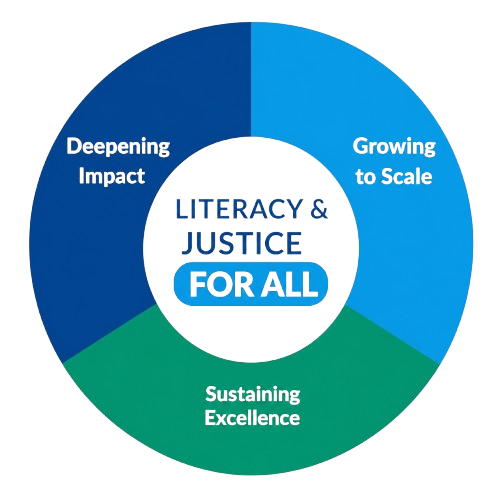
In terms of scaling, the Cox Campus remains unmatched in the marketplace. We are the only free IDA-accredited platform for structured literacy training, and this fall we are poised to reach another major milestone: $200 million in coursework delivered to educators and healthcare professionals at no cost to the field—alongside our almost 400,000 members and budding systems-level partnerships in Iowa, Hawaii and Wyoming.
- Over 95% of the Rollins Center staff regard our organization as the best place to work to advance universal literacy.
- 93% indicated they see how their efforts contribute to the broader success of the organization.
- By way of sustaining excellence, the Rollins Facilitating Team is implementing the first phase of high-impact, low-effort improvements which originated with the staff.
As we bring the 2025 academic year to a close, I extend my deepest gratitude to all who enable, fund, believe in, and advance this work. Only with you can we continue to build a future worthy of the children and families we serve.
In Service,
Ryan Lee-James, Ph.D., CCC-SLP
Director
110,000
children reached through partnerships nationwide
$200M
in free coursework delivered to the field
400,000
Cox Campus members and growing
Since 1938
Each Child & Every Child.
Since 1938, the Atlanta Speech School has been dedicated to helping each and every child find their voice to decide their own futures. As a program of the Atlanta Speech School, the Rollins Center for Language & Literacy, and our free online Cox Campus, are positioned to amplify and extend the work of our school into the community—locally, statewide, nationally, and globally.
Atlanta Speech School
Provides precise, science-driven engagement and instruction based on the sciences of healthy brain and language development and literacy construction for students on campus. Deep Impact.
Rollins Center
Serves as the educational equivalent of a “teaching hospital,” broadening access to the sciences through coaching and systemic transformation.
Cox Campus
Amplifies science-backed practices to democratize language and literacy and reach children, their families and educators anywhere. Broad Reach.
Vision
Literacy and justice for all.
Mission
We cultivate expertise with educators, system leaders, families, and advocates across the sciences of healthy brain development, language, and literacy so that all children can think critically and act boldly to reshape the world.
Definition of Deep Reading
Aligned with Dr. Gholdy Muhammad and Dr. Maryanne Wolf, deep reading goes beyond “proficiency” to a deeper, more analytic brain—one that thinks critically, takes the perspective of others, and imagines a better world. Reading and writing are “transformative acts that improve self and society.”
Birth–Age 5 & PK–5th Grade
Implementation Model
Our implementation models focus on systems-level changes that support child-facing adults across the learning continuum—from perinatal space to deep reading. Flexible and responsive to local needs—whether urban, suburban, or rural—our model focuses on the following:
School/District Leadership Support
We work alongside leaders to provide support across a broad range of language and literacy topics, as well as the systems and structures needed for successful implementation.
Coaching & Implementation Support
Our coaching model is grounded in the science of reading and focuses on accelerating student language and literacy outcomes by strengthening educator knowledge, practice, and implementation.
Professional Development Workshops
We provide professional learning workshops across a broad range of language and literacy topics, as well as the systems and structures in schools and districts needed for successful implementation.
Cox Campus Coursework & PLCs
Cox Campus is the only free and internationally accredited language and literacy professional learning community built explicitly for educators serving children from early childhood education through elementary school.
Science-Backed
Language & Literacy Frameworks
Our approach to implementation is informed by decades of interdisciplinary research. We’ve operationalized the science into drivers that support both early learning and PK–5th grade learning environments.
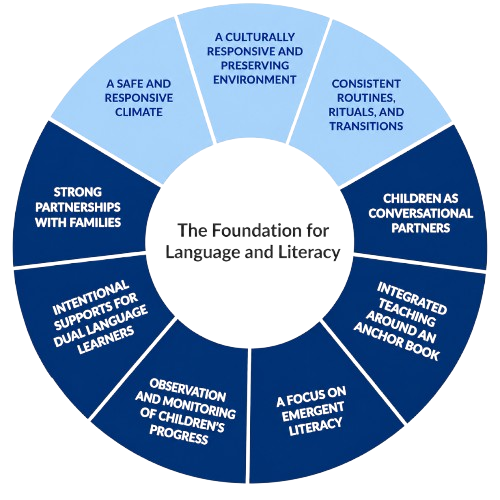
9 Elements of a Language-Centered Ecosystem
Early Learning · Foundation for Language and Literacy
- A Safe and Responsive Climate
- A Culturally Responsive and Preserving Environment
- Consistent Routines, Rituals, and Transitions
- Children as Conversational Partners
- Integrated Teaching Around an Anchor Book
- A Focus on Emergent Literacy
- Observation and Monitoring of Children’s Progress
- Intentional Supports for Dual Language Learners
- Strong Partnerships with Families
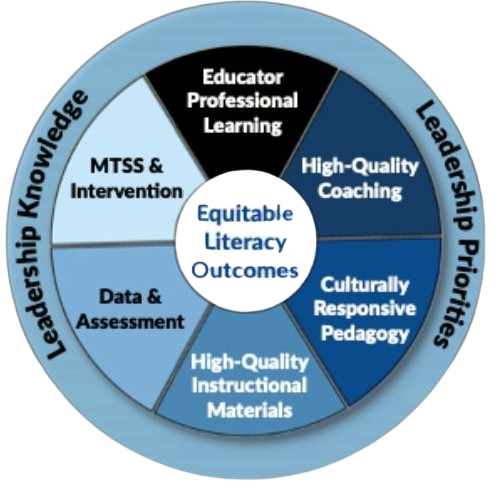
Equitable Literacy Outcomes
Pre-K–5 · System-Level Drivers of Change
- Educator Professional Learning
- High-Quality Coaching
- Culturally Responsive Pedagogy
- High-Quality Instructional Materials
- Data & Assessment
- MTSS & Intervention
We recognize that professional development alone does not lead to transformational change. Coaching through modeling, guided practice, and targeted feedback ensures effective and lasting implementation of evidence-based practices. Grounded in student data and classroom observations, our coaching approach engages leaders and educators in analyzing data, setting priorities, and developing actionable plans that drive measurable improvements in language and literacy outcomes. By aligning coaching with data-informed decision-making, we build scalable and sustainable systems that create lasting impact for children and educators.
2024–25 Reach
Field Implementation: Demographic & Impact Data
In 2024-25, our field implementation team worked with more than 160 schools, early learning centers, hospitals, and clinics reaching nearly 108,000 children from infancy through literacy. Of those:




98,000
Close to 98,000 children are in Georgia.
10
Georgia Navigation Districts through the Georgia DOE.
3
Metro School Districts/Charter Networks through LJFA.
98,000
Close to 98,000 children are in Georgia.
2
Major hospitals that extend the work into neighborhood clinics.
In 2024-25, our field implementation team worked with more than 160 schools, early learning centers, hospitals, and clinics reaching nearly 108,000 children from infancy through literacy. Of those:
City / Urban
Metro Atlanta Schools:
- · KIPP Atlanta
- · Kindezi
- · IAS
- · Zest
89%+
of enrollment represents Black/African-American students.
ALL
of our city/urban schools are classified as Title I.
85%+
of students at Kindezi, KIPP, IAS and Zest qualify for Free and Reduced Lunch Status (FRL).
Marietta
Over 67% qualify for FRL; 32% Black/African American, 40% Hispanic, 21% White; 27% Multilingual Learner/Limited English Proficient.
Rural / Town
Metro Atlanta Schools:
- Colquitt
- Dooly
- Grady
- Lowndes
- Pelham
- Thomas
of our rural/town schools are classified as Title I.
ALL
of students qualify for Free and Reduced Lunch Status (FRL).
80%+
Non-Rural or Non-Urban
Metro Atlanta Schools:
- Muscogee
- Valdosta
of enrollment represents Black/African-American students.
55%+
of our non-rural/non-urban schools are classified as Title I.
ALL
of students qualify for free and reduced lunch status.
85%+
*Sources: National Center for Education Statistics (NCES), the statistical agency of the U.S. Department of Education and Georgia Governor’s Office of Student Achievement (2023-24).
Literacy & Justice for All
Rollins Center for Language & Literacy · A Program of the Atlanta Speech School · Cox Campus
2024–2025 Annual Impact Report · Celebrating 20 Years of the Rollins Center & 10 Years of Cox Campus
Perinatal & Pediatric Care
Talk With Me Baby
Children whose parents engage in serve and return language practices through Talk With Me Baby are exceeding developmental language outcomes.
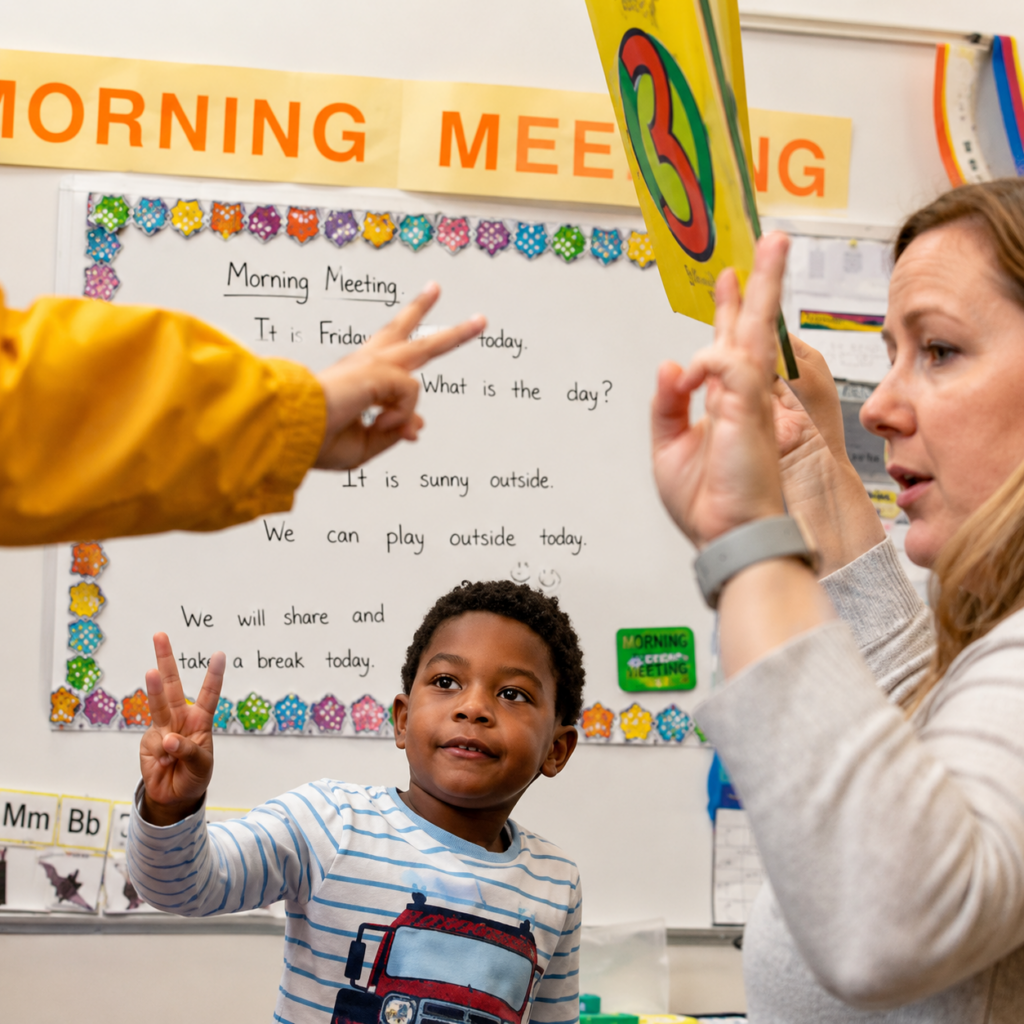
Science on Healthy Early Brain Development
The science is clear: high-quality language experiences starting at birth establish the foundation for success in school and life. Science shows brain circuitry for speech, language, and hearing (and many other developmental processes) is being constructed before birth and continues through adulthood, with exponential growth of more than one million brain connections forming each second from 0-3-year-olds. From the third trimester, babies hear and process sound from the outside world, especially the voices of their mothers. Prenatal exposure to language builds the foundation for cognitive development. What starts as crying, cooing, and sporadic eye gaze – with caregivers intentionally delivering “language nutrition” – become babies’ first words, phrases, conversational abilities, and ultimately the development of literacy.
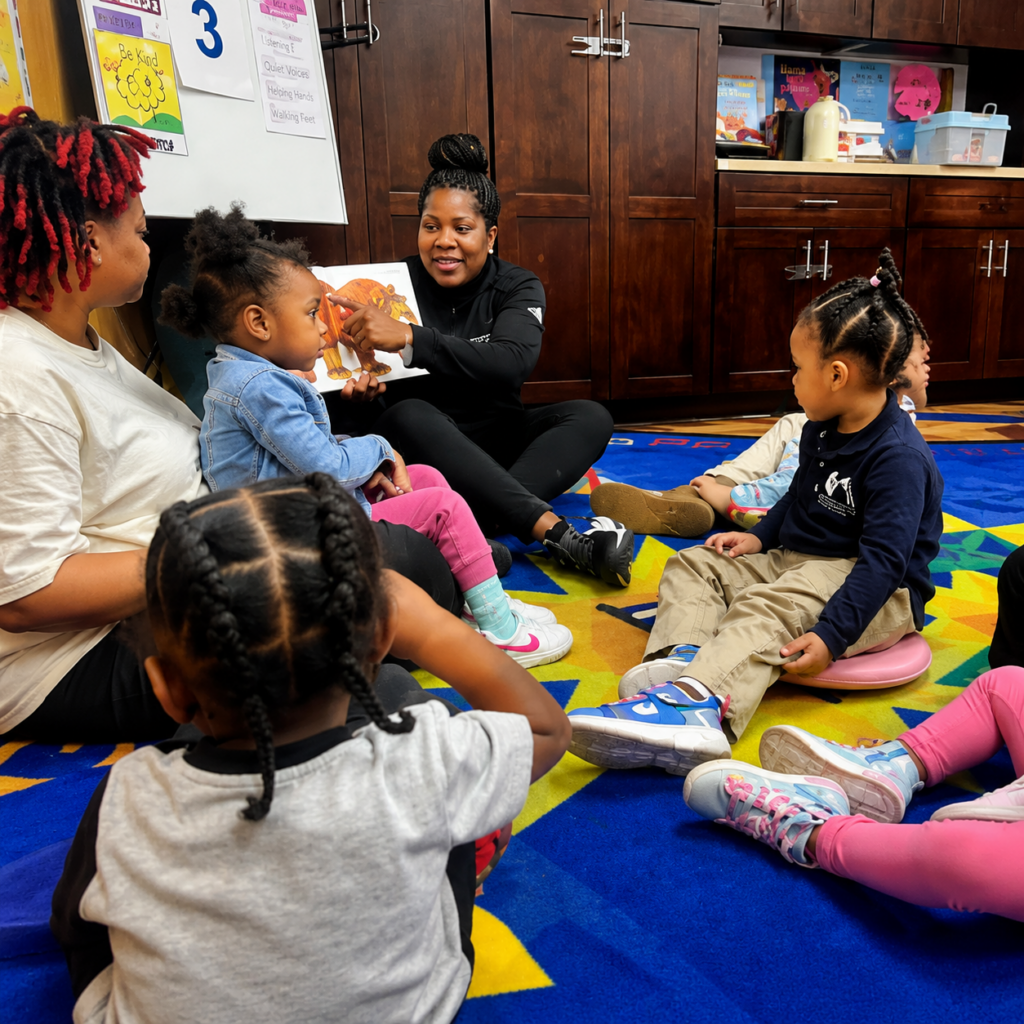
Talk With Me Baby Implementation
Since 2017, Grady Healthcare, in the heart of Atlanta, has partnered with the Rollins Center for Language & Literacy to become the first Talk With Me Baby (TWMB) Birthing Center in the nation and redefine their standard of care to ensure that all children leave the hospital in the arms of families prepared to nourish them with language. Each year, approximately 3,000 Grady Babies are welcomed into the world, surrounded by a language-centered ecosystem built on the practices and principles of early healthy brain development.
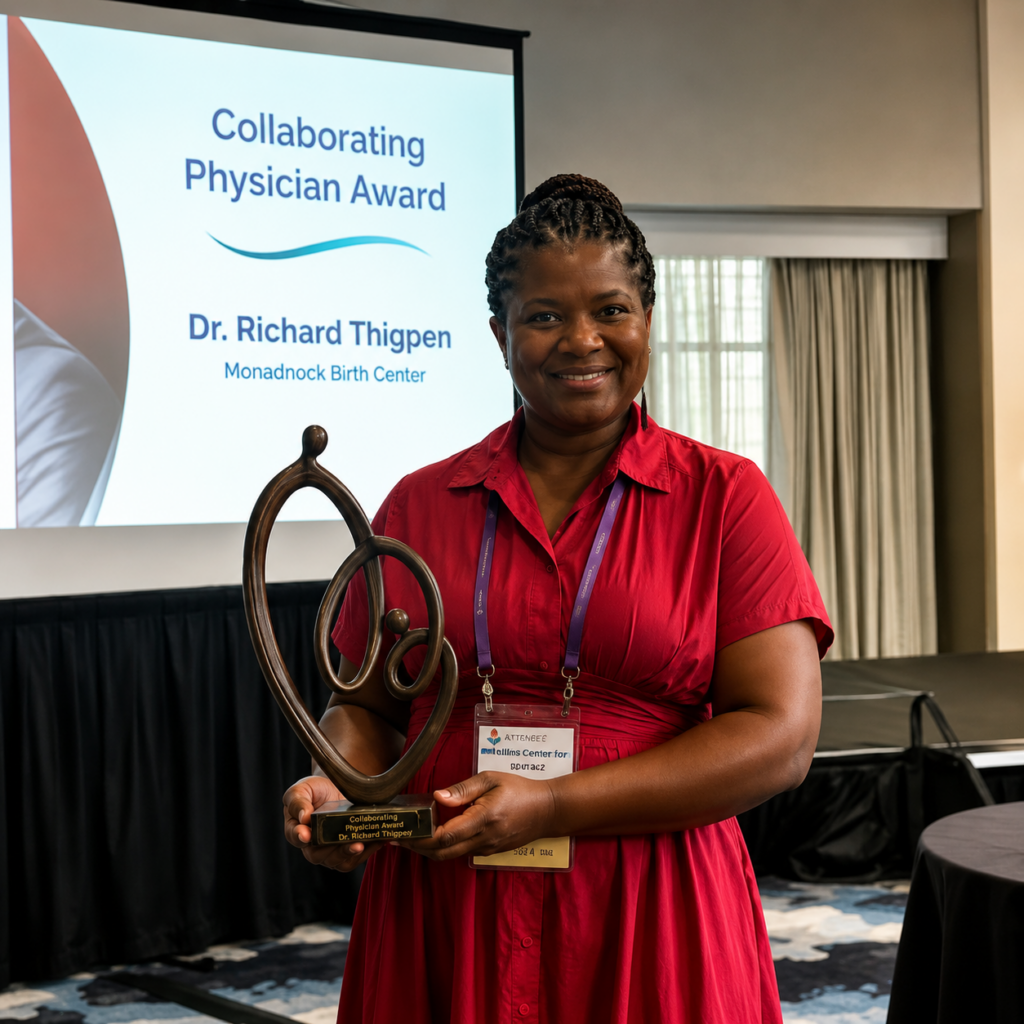
Celebrating Leadership: Rollins Center Wins 2025 American Association of Birth Centers Community Award
The American Association of Birth Centers selected the Rollins Center for Language & Literacy to receive the 2025 American Association of Birth Centers (AABC) Community Award in recognition of leadership for
the inclusion of birth centers in partnerships to advance health equity and whole family well-being. The award was presented at the 2025 AABC Institute in Portland, Oregon, during the Awards Brunch on
Sunday, September 14th.
Perinatal & Pediatric Care + Family Engagement & Community Health
Scaling Talk With Me Baby
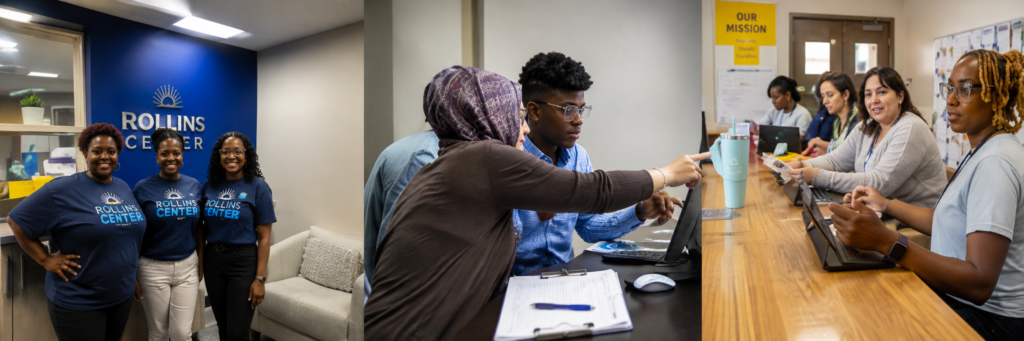
Recent coaching conversations have focused on strengthening relationships, aligning goals, and creating new video coaching content to better support teams and families. This shared work centered on reflection, celebration, and continuous growth helps shape new pathways for impact.
That same spirit of collaboration fueled an exciting milestone: Talk With Me Baby received a major boost through a generous investment from the Goizueta Foundation, awarding start-up grants to four Atlanta-area organizations who have demonstrated readiness to scale Talk With Me Baby in their clinic/healthcare ecosystem. The initiative offers a replicable model for embedding early language, connection, and support into family care while advancing equitable systems that strengthen children and families from the start.
New partners include Ethne Health, Center for Black Women’s Wellness, Rainbow House Children’s Resource Center, and Atlanta Birth Center. Together, they reflect what’s possible when partnership, purpose, and innovation unite to support families from the very beginning. Alvanetta Alexander leads this work as the new Talk With Me Baby Integration Coordinator! Alvanetta has been a part of the LJFA family for the last 5 years as the Senior Nurse Navigator at Grady Hospital.
Below are highlights for each of the four partners:
Atlanta Birth Center
Atlanta
4,080 visits per year
440 live births
Potential expansion into pediatric services
Center for Black Women’s Wellness
Clayton, DeKalb & Fulton Counties
3,108 people engaged with 2,591 home visits
241 prenatal patients
80 live births
Ethne Health
City of Clarkston
14,000 annual clinic visits
40 languages spoken by patients
20 languages spoken by staff
Rainbow House
Houston, Peach, Twiggs & Greater Macon
1,000 perinatal participants
1,565 pediatric participants
400 OB/prenatal participants
Early Care & Learning (Infants – Pre-K)
Children in early learning centers where teachers practice the Language-Centered Ecosystem are reaching developmental benchmarks across language and literacy.
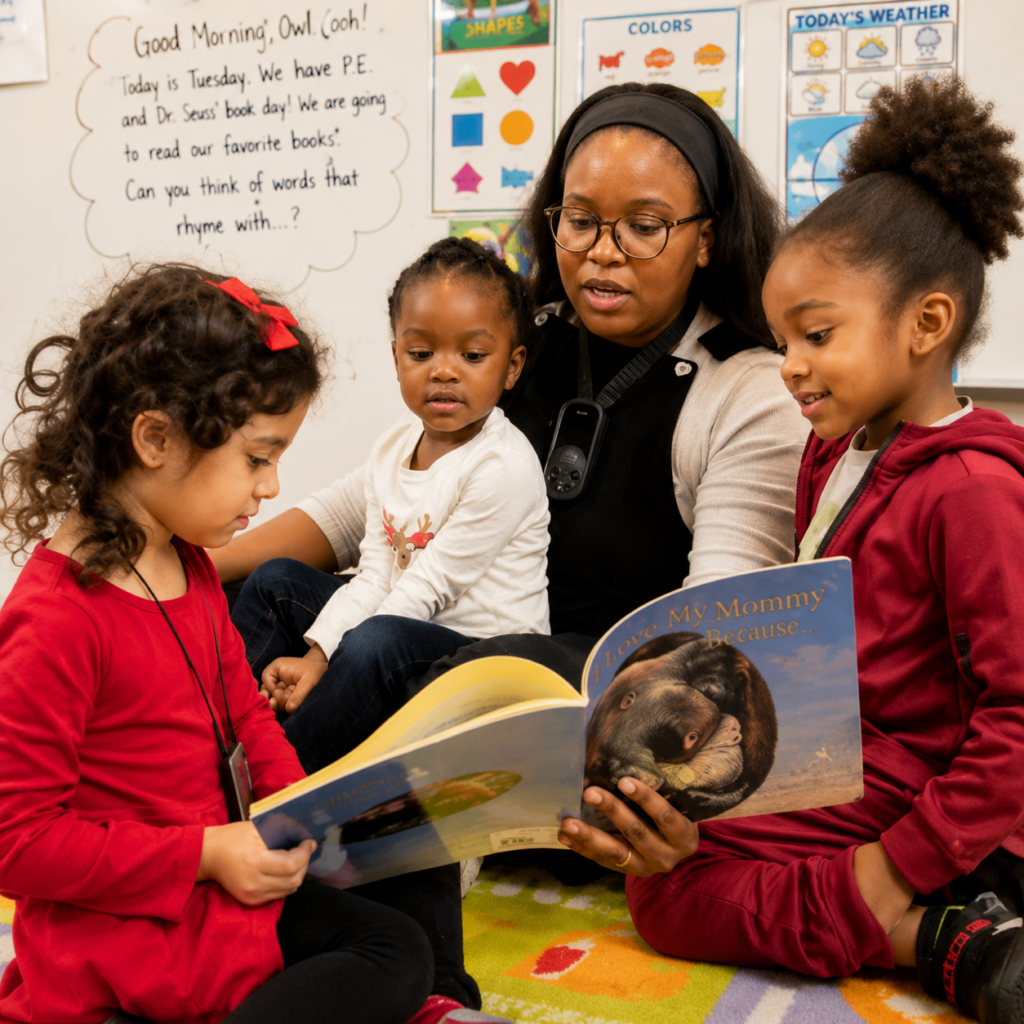
Oral language, listening and speaking, critical thinking, empathy, and executive function skills are necessary to build the foundation for literacy and deep reading. Research indicates an important reciprocal relationship between oral language and executive function that supports the acquisition of emergent literacy skills such as phonemic awareness, vocabulary, and listening comprehension. Early learningecosystems play a central role in cultivating our youngest learners and the evidence is definitive – language-centered early learning programs support kindergarten readiness and the foundational literacyskills needed for elementary and secondary education (with some evidence to show that the lasting positive effects of early learning evidenced into college and adulthood).
Early Care and Learning Implementation
Since 2009, our team of early learning coaches have supported Atlanta’s oldest and largest early care and learning providers – Sheltering Arms and the YMCA of Metro Atlanta respectively. Through this decade plus partnership, childcare providers in Atlanta, and now in Marietta, are engaged in ongoing professional learning and best practices across the 9 Essential Elements of a Language-Centered Ecosystem. With an eye on cultivating expertise and agency within our early care and learning systems, the Rollins Center has been focused on building sustainable coaching and professional development models with site-based and organizational leadership. Through our work with Quality Care for Children (QCC), the language-centered ecosystem is scaled across the state through their technical assistance consulting team.
In 2024-25, the Rollins Center, in partnership with QCC, YMCA, Sheltering Arms, and Marietta’s Lembeck Center, supported 64 early care and learning sites in the metro Atlanta area. Through this collaborative effort, the Rollins Center leveraged the Ecosystem Construction Measure at every site to determine a professional development plan that supports strengths and areas for growth. Rollins delivers a hybrid monthly coaching model providing support for site and organizational instructional leadership, who in turn, directly coach early learning teachers. Our team has also expanded the work into family connections, including a multilingual approach that includes and centers families from linguistically diverse backgrounds.
Kindergarten – 5th Grade
Structured Literacy in Practice
Students in districts where teachers are implementing structured literacy practices are demonstrating gains in reading.
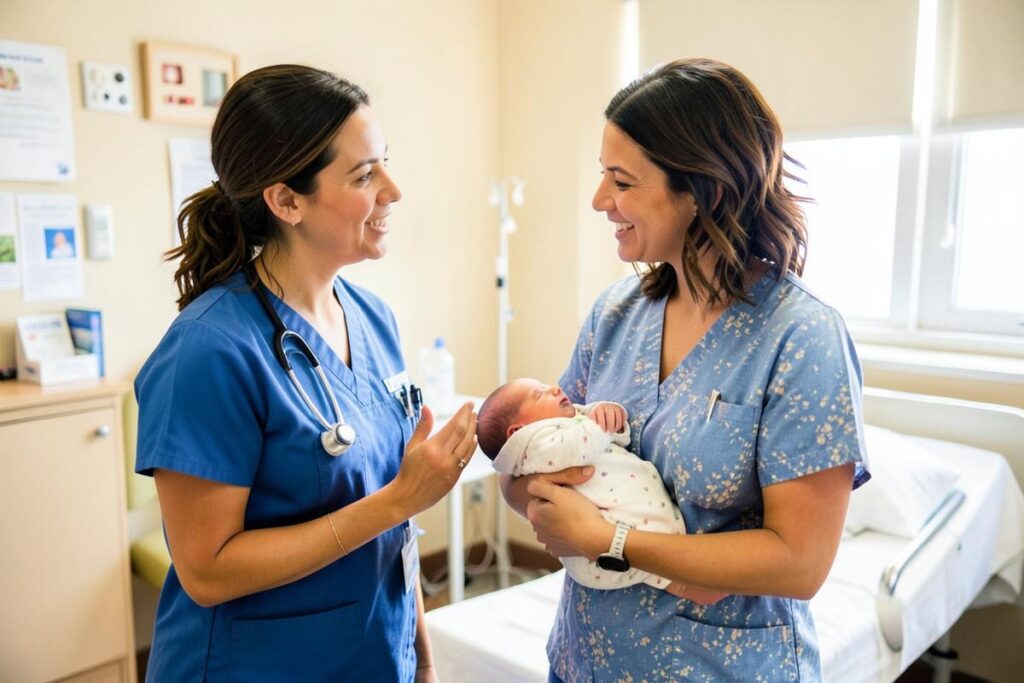
Learning to read requires new neural pathways, most effectively established through explicit and systematic instruction that integrates code-based and language-based skills.
During 2024-25, the Rollins Center continued its partnership with Marietta City Schools, KIPP Atlanta Schools, and 10 Georgia school districts to create sustainable change that puts students on a path to deep reading.
12 knowledge and practice implementation trainings across 10 districts – 94% of participants found the content easy to replicate for redelivery.
Over 50 site visits to observe the work in practice and provide feedback.
94% of leaders surveyed indicated partnership with Rollins has strengthened their literacy practices.
Georgia’s 2025 LitLink Conference
The Rollins Center co-hosted the second annual Georgia LitLink in June 2025, our state’s only literacy conference dedicated to classroom teachers – convening more than 650 teachers and educators representing 150+ Georgia districts, counties, and schools.
4
Keynote Sessions
45
Breakout Sessions
30+
Expert Scholars & Practitioners
“Attending this conference has afforded me the opportunity to deepen my knowledge on structured literacy instruction in the classroom.”
Growing to Scale
National Navigation & Locally Led Partnerships
We have continued to deepen and broaden partnerships with state, regional, and local organizations across the United States through two codified pathways.
Locally Led
- Always FREE, unlimited professional learning
- Cox Campus Groups facilitated by local leadership
- Courses with Implementation Guides for instructional leaders
- Yearlong Journeys – virtual PLCs hosted by the Rollins Center
Wisconsin spotlight: more than 120 schools and districts set up locally led groups; 14,610 Wisconsin teachers completed 87,806 courses at no cost – a fair market value estimate of $13.2M.
National Navigation
- Contract-based and customized annual plans
- Site visits throughout the year
- Coaching and implementation support
- Data sharing agreements and customized credential
Ohio spotlight: more than 29,507 educators are Cox Campus members and have completed 86,945 courses toward a state-endorsed credential – roughly $13M in value from a contract just under $50,000.
Georgia
Cox Campus is ‘white labeled’ as the Georgia Literacy Academy. Teachers have completed 348,000 courses – a fair market value of $52.2M.
Hawaii
Complex Area Leaders began Cox Campus coursework in 2025; Hawaii teachers join in January 2026 as part of the DOE Science of Reading initiative.
Iowa
Selected as an approved provider for the statewide Comprehensive Literacy State Development Grant, which includes $24M to Iowa districts.
Wyoming
The Wyoming DOE partnered with Cox Campus as an approved professional learning option for educators statewide.
Higher Education Partners
Ten institutions integrating Cox Campus coursework into teacher-prep programs.
- Clark Atlanta UniversityList Item #1
- Kennesaw State University
- South Georgia State College
- Valdosta State University
- Clayton State University
- Langston University
- Thomas University
- Fort Valley State University
- Southern Regional Technical College
- University of North Georgia
Scaling Through Cox Campus
June 1, 2024 – May 31, 2025
73,826
new members joined Cox Campus, a 27% increase over 2023-24
372,101
learners have joined the platform since inception
308,106
total course starts
875,825
total resource downloads
282,771
total course completions – a 97% increase over 23-24
914,462
all-time course completions
5 New Courses Launched
July 2024Data-Driven Instruction
November 2024Supporting Middle and High School Students with Reading Comprehension
new members joined Cox Campus, a 27% increase over 2023-24
new members joined Cox Campus, a 27% increase over 2023-24
September 2024Early Literacy
Sustaining Excellence
Recruit, Train, and Retain an Expert Team
In FY25, the Rollins Center team was comprised of nearly 50 professionals who together represent a diverse, experienced, and expert team leading our collective work.
$5.5M
invested in salaries and benefits
$8.8M
total FY25 expenses, $2.7M under budget
$11.8M
FY26 budgeted expenses
Our team attended professional conferences both to learn and to share, including nearly 15 presentations nationally and locally, at premier conferences such as NAEYC, the Black Literacy Matters Conference, and Georgia’s LitLink Conference.
Total FY26 revenue is projected at $17.2M, including cash carry-forward, new grants, and income. $275K is projected earned income from the Rollins Endowment Fund, which grows by $500K annually thanks to the grant from the Rollins Family.
“The overall culture at the Rollins Center is welcoming, supportive, and collaborative. There’s a strong sense of cohesiveness and teamwork, with everyone genuinely passionate about their work.”
Rollins Team Member
ASSESSMENT & INSTRUCTION
Appendix A
Screener and Diagnostics Assessments
It is important to note that, in Georgia, teachers mainly use two types of assessments: screeners and diagnostics. For the purpose of this report, we included only the specific screeners and diagnostics that districts selected for their assessments.
As stated above, in Georgia, screener data refers specifically to the results from universal reading screeners administered to students in grades K–5, typically conducted three times per year—at the beginning, middle, and end of the school year. The screeners are brief, evidence-based assessments designed to measure foundational literacy skills, identify students who may have a significant reading deficiency (including characteristics of dyslexia), and track progress over time.
On the other hand, diagnostic assessment refers to a more in-depth and targeted evaluation that measures students’ current skills, knowledge, and learning needs in specific subject areas. This detailed information guides targeted instruction, small-group work, or one-on-one interventions tailored to each student. Over time, diagnostic assessments help track progress, adjust teaching strategies, and ensure students are building the skills they need to succeed.
Similar to screeners, districts have the option to choose a diagnostic assessment from the approved list that aligns with their needs, allowing them to adopt the tools that best support their specific early literacy goals.
The Core Phonics Diagnostic Assessment
is a tool used to evaluate students’ foundational reading skills by identifying their mastery of key phonics patterns and principles. It measures specific areas such as letter-sound correspondence, decoding skills, and recognition of common spelling patterns, providing detailed insight into a student’s strengths and areas for growth. The results guide targeted instruction, ensuring that teaching is tailored to address individual learning needs and supports the development of proficient, confident readers.
DIBELS® (Dynamic Indicators of Basic Early Literacy Skills)
is a set of procedures and measures for assessing the acquisition of literacy skills. They are designed to be short (one-minute) fluency measures that can be used to regularly detect risk and monitor the development of early literacy and early reading skills in kindergarten through eighth grade.
Acadience
is a research-based universal screener that measures key early literacy skills such as phonemic awareness, phonics, fluency, and comprehension. It is designed to quickly identify students who may be at risk for reading difficulties, including characteristics of dyslexia, and to monitor progress throughout the year.
The MAP (Measures of Academic Progress)
assessment is an adaptive test that measures student achievement and growth in subjects like reading, math, and language usage. It adjusts the difficulty of questions based on student responses, providing a precise picture of current skill levels and identifying areas for growth.
i-Ready
is an adaptive online assessment that measures student performance in reading and mathematics. It identifies each student’s strengths and skill gaps, providing detailed data to guide personalized instruction. The assessment adjusts in difficulty based on responses, ensuring an accurate measure of ability, and supports ongoing progress monitoring throughout the year.
The STAR Assessment
(by Renaissance) is a fast, computer-adaptive test that measures students’ proficiency and growth in reading, math, and early literacy.
Testimonials from Our Healthcare Partners
Hear directly from the healthcare and community organizations bringing Talk With Me Baby into the lives of families.
Center for Black Women’s Wellness
Jamie, CEO
“We have home visitors that are in the home working with moms on a daily basis. And so Talk With Me Baby is meaningful because it can be infused into what we already do in the homes with families, but it could be infused into our other work as well, such as the clinical services that we provide, then as economic self-sufficiency program that we have.”
Ethne Health
Dr. Esther, Co-Founder
“Last year alone, our clinic had patients who spoke over 40 languages. So, with the Talk With Me Baby initiative, we want families to know they can speak in their native tongue, they can create this legacy and preserve their culture while interacting with their families in a new culture.”
Rainbow House Children’s Resource Center
Kathleen, Executive Director
“We are so excited for this program. We’re excited about what it’s going to do in this hospital. We’re excited about what it’s going to do at child cares, our health departments. But most of all, we’re excited about the families that we’re going to serve.”
Atlanta Birth Centre
Tamara, Executive Director
“Adding the Talk With Me Baby program to what we offer our families just provides a seamless integration between what we already value. It’ll provide some reassurance to our families that what their midwives and their care providers are sharing with them is something that has proven benefits for them to nurture and grow their families right from the very beginning.”