
“The most American thing about America is American Indians.” —Paul Chaat Smith (Comanche)
Columbus Day is celebrated on the second Monday of October each year and is a recognition of the Italian explorer “discovering” land in the Western Hemisphere. Although this event is a momentous part of America’s history, Columbus Day ignores the impact of Christopher Columbus’ discovery. In particular, the damage inflicted upon indigenous communities and their resilience in the face of violence by European explorers is often left out completely.
Today, many cities and states across the U.S. now celebrate Indigenous Peoples’ Day on the second Monday of October to honor Native Americans, their rich culture, and their history. The U.S. is not the only country recognizing the importance of its indigenous peoples: Canada, Brazil, Taiwan, and the Philippines have also taken initiative in recent years to honor their respective indigenous cultures in meaningful and intentional ways.
This Indigenous Peoples’ Day, we invite you to consider what your children know about America’s indigenous peoples. Children’s first experience with the topic is often in the classroom and associated with the idea of Christopher Columbus discovering America. Using Columbus Day to introduce children to America’s indigenous people risks obscuring American Indian cultures, along with their history in our country, and makes their very existence seem like something of the past. When we share stories of marginalized people with children in meaningful ways, we are setting the stage for reforming America’s view on our national history and lifting the voices of groups that have been silenced for centuries.
It’s never too early to start laying a strong foundation of equity and inclusion. Use this important day to talk about American Indians and share language-rich books or stories that uplift Native culture and encourage meaningful conversations.
Books and stories are a great way to showcase diversity and create a culturally responsive classroom.
We’ve gathered some suggestions for stories that highlight American Indian culture you can read on Indigenous Peoples’ Day and throughout the year:
- Fry Bread: A Native American Family Story by Kevin Noble Maillard
- We Are Water Protectors by Carole Lindstrom, Michaela Goade
- Bowwow Powwow by Brenda J. Child, Jonathan Thunder
- Birdsong by Julie Flett
- We Are Grateful: Otsaliheliga by Traci Sorell
- First Laugh–Welcome, Baby! by Rose Ann Tahe, Nancy Bo Flood
- At the Mountain’s Base by Traci Sorell
- Rabbit’s Snow Dance by Joseph Bruchac
You can also check out American Indians in Children’s Literature for more ideas!
No matter which of these books you choose, there are many great vocabulary words you can use to expand children’s vocabularies around this important topic, including:
- Indigenous or Native people: The people who lived on a land first, before other groups of people came
- Tradition: Something you do or believe that was passed down from the people who lived before you.
- Stereotype: An idea about how someone will act, based on a group they are in.
TALK Strategy
As you’re reading a book or telling a story, be sure to use the TALK strategy to engage in meaningful conversations:
- T is for Tune in: get into the child’s world and let them know that what they are thinking, or feeling is important.
I was thinking about the story we just read, and I noticed you…. - A is for Ask: ask open-ended questions to encourage back-and-forth conversation.
Why do you think……..? - L is for Lift Language: model the language you want your child to use in the future.
Recognize their answer and expand on what they say by adding rich, complex language using sophisticated words, then answer the question yourself to show a language rich response. - K is for Keep it going: Aim for multiple back-and-forth exchanges with your child around the story.
Remember to Strive for Five – try to go back and forth with your child 5 times. #striveforfive
Don’t limit these conversations to the book. Be sure to use the book as a springboard to have rich, meaningful conversations with your child where you honor and celebrate and learn about the rich cultures and history of American Indians.
Activities to Honor Indigenous Peoples’ Day
Check out the resources listed.
Spotlight Indigenous Authors and Artists
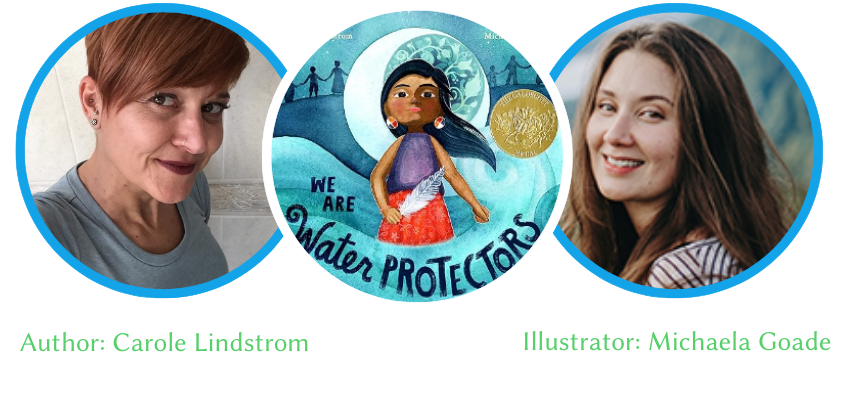
Carole Lindstrom, author of We Are Water Protectors. She has won numerous recognitions such as the New York Times Best Selling, the Literature of Young People Author Award, and others. Carole Lindstrom’s was born in raised in Nebraska and currently resides in Maryland. Her tribal homelands are in Belcourt, North Dakota. She is Anishinaabe/Metis and is an enrolled member of the Turtle Mountain Band of Ojibwe.
Michaela Goade, is the illustrator of We Are Water Protectors. In 2021, she became the first Indigenous artist to win the Caldecott Medal for her illustrations in We Are Water Protectors. Michaela Goade is a member of the Tlingit and Haida tribes, is known for her work on picture books about Indigenous people.
Read and Listen to books by Indigenous Authors
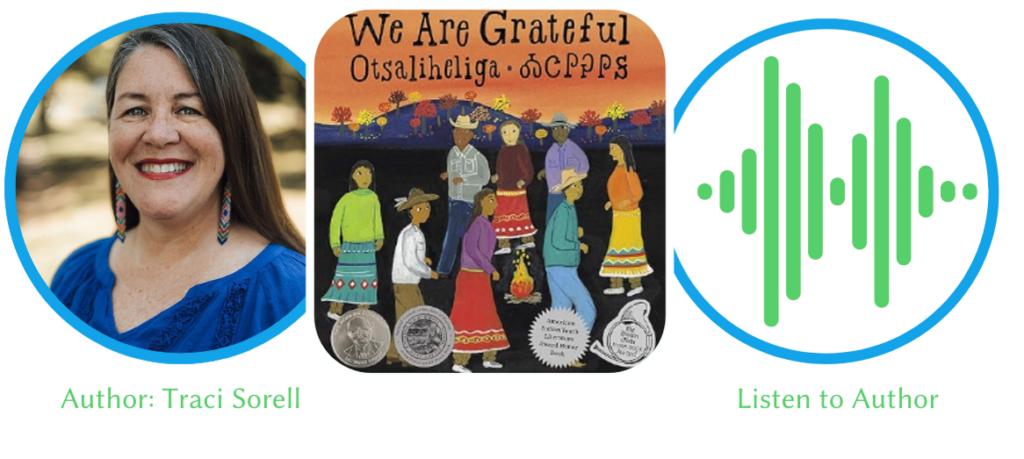
Traci Sorell, author of We Are Grateful explains her the origin of her name (“teachingbooks.net”, 2023).
More Ideas
- Spotlight Indigenous Rights Activists
- Research and Share Land Acknowledgements
- Rebuild Local Ecosystems with native plants
- Support Indigenous businesses
- Donate to a Cause.
Digital Resources
Native Land Digital Lookup
Epic Books A digital reading platform with a multitude of high-quality digital versions of beloved picture books. Free for Teachers, Free 30-day trial for families
Overdrive A digital platform created for borrowing e-books. Access with your local library card. Free
Local Library Many libraries offer both in person and online access to books. Free
YouTube Read alouds of every book listed above, and many more. Free