
“You’re never too old, too wacky, too wild, to pick up a book and read to a child.”
As we celebrate Dr. Seuss this week, we recognize there was perhaps no one better at creating unique and memorable stories for children of all ages. His rhymes fill classrooms across the globe and continue to inspire generations of young readers. But what makes the books of Dr. Seuss so special? Perhaps it’s his ability to incorporate rhythm and rhyme in every one of his stories and the impact this has on a child.
His books featured rhythm and rhyme in a way that captures imaginations and sparks children’s learning. That’s part of the reason we love him! Why not try some of the classics in your classrooms this week? Here are a few of our favorites:
Infant & Toddler
|
Preschool & Pre-K
|
How Rhythm and Rhyme Nurtures Children’s Development
We believe Dr. Seuss knew something else about rhythm and rhyme – it helps build children’s brains! As you incorporate Dr. Seuss classics in your classroom, you can be a brain builder. Let’s explore the benefits of rhythm and rhyme for infants and toddlers in four key areas: social-emotional, physical, cognitive, and language and literacy.
Social-Emotional Development
Sharing rhythm and rhyme with infants and young toddlers is a great way to build relationships with children and foster responsive interactions that help build their brains! Here are a few ways to support social-emotional development at various ages:
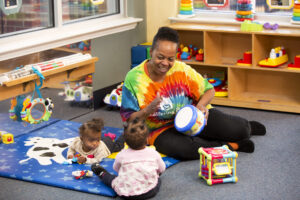
- 0 – 12 months: Sing a song or lullaby to soothe crying babies or during transitions, such as nap time. This helps babies begin the process of learning how to calm themselves.
- 12 – 24 months: Sing songs about feelings to help toddlers learn about and express their emotions.
- 24 – 36 months: Expose toddlers to songs and rhymes from their home cultures and languages to create continuity between home and caregiving settings.
Physical Development
“Put your right foot in, your right foot out, right foot in, then you shake it all about. And then you do the hokey pokey, turn yourself around… That’s what it’s all about!” Fingerplays, songs, and activities are some great ways to get children moving and build their bodies – as well as their brains! Rhythm and rhyme can help support the development of muscles and coordination as children grow. To support a child’s physical development through rhythm and rhyme, try these techniques: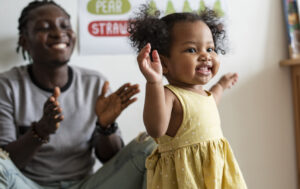
- 0 – 12 months: Help babies move their bodies to the rhythm of the beat while you hold them or when they lay or sit on the floor.
- 12 – 24 months: Choose songs and rhymes that build on young toddlers’ body awareness, like “Head and Shoulders” and the “Hokey Pokey,” to encourage balance and a better understanding of body parts.
- 24 – 36 months: Challenge your students by making sure creative movement is a part of your songs.
See it in action!
Watch as Melissa, who teaches older toddlers, uses a song to grab her students’ attention and get them moving!
Cognitive Development
“One fish, two fish, red fish, blue fish.” Notice a pattern there? Before you know it, your students will! Rhythm and rhyme provides opportunities to practice patterns, symbolic thinking, and early math skills in young children. Here are some ways to support cognitive development using rhythm and rhyme:
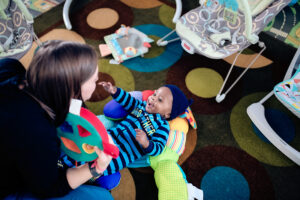
- 0 – 12 months: Provide consistent experiences with the same song or rhyme (at the same time during the day, e.g., naptime) to help young babies (and toddlers) remember and link rhythm and rhyme with these experiences.
- 12 – 24 months: Learning to anticipate patterns and place objects in a sequence are important for the development of critical early math and reading skills. Counting songs are really good for this (One, Two, Buckle My Shoe; Five Little Monkeys).
- 24 – 36 months: Act it out! Have older toddlers act out songs and rhymes. You can also incorporate props or pictures in your songs.
Language and Literacy Development
Rhythm and rhyme supports the development of language and literacy, including vocabulary, comprehension, world knowledge, and phonological awareness – all important aspects of putting children on the path of learning to read. Try to incorporate these tips to support language and literacy development in your classroom:
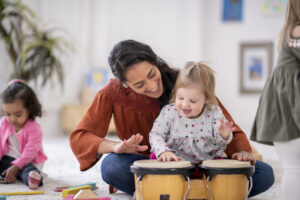 0 – 12 months: Engage babies in simple songs and rhymes, including some with corresponding hand gestures, like “The Wheels on the Bus” or “Twinkle Twinkle.” Babies can control their hands and fingers earlier (around 9 months) than they can sing or talk (usually around 10-12 months).
 - 12 – 24 months: Use songs to teach vocabulary. Songs and rhymes help toddlers put words and phrases together. Pause and let children fill in the word when singing well-known songs or reading rhyming books (Row, row, your ____; Brown bear, brown bear, what do you see … I see a ______ looking at me!).
- 24 – 36 months: Expose young children to songs and rhymes from other cultures. Introduce hand gestures to support the lyrics and enhance children’s comprehension. Don’t forget to talk to the families of your students to see if they can share songs from their culture to showcase in class.
See it in action!
See how Faye uses rhythm, rhyme, and motions to engage her students? They’re so excited to join in!
Remembering and celebrating Dr. Seuss is the perfect time to bring rhythm and rhyme into your classroom – but why not keep doing rhythm and rhyme all year long?
No matter the season, no matter the time, there’s always opportunity for rhythm and rhyme.